Voter Targeting
| Publicly available voter registration lists enable campaigns the ability to target prospective voters. GIS enables this data to have even more power in efficiently and effectively designing walking sheets. Unless your campaign has volunteers to spare, use this technology to ensure that your volunteers' efforts will have the largest impact. This four-step methodology will ensure that every step counts!! The larger and more diverse the district, the more valuable these tools will prove. | |||||||||||||||||||||||||||||||||||||||||||||||||||||||||||||||||||
|
|
|||||||||||||||||||||||||||||||||||||||||||||||||||||||||||||||||||
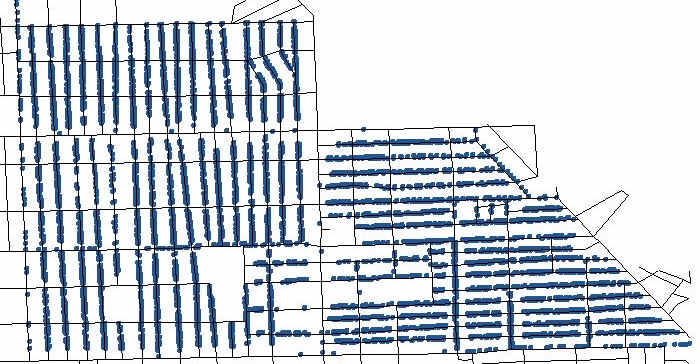
Step 2 The second step is to aggregate voters to a grid. This example is a one-tenth mile square grid. ie, each square is approximately .1 x .1 mile. Just looking at the dots, most areas look like all the others but now it is clear that some areas will have a higher impact per hour of walking. 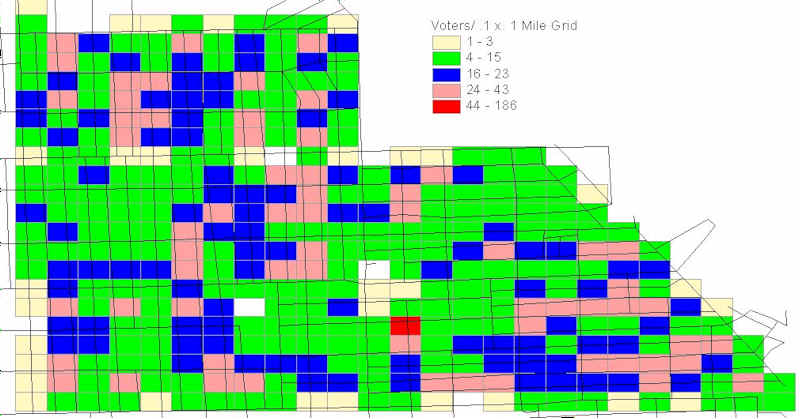
|
|||||||||||||||||||||||||||||||||||||||||||||||||||||||||||||||||||
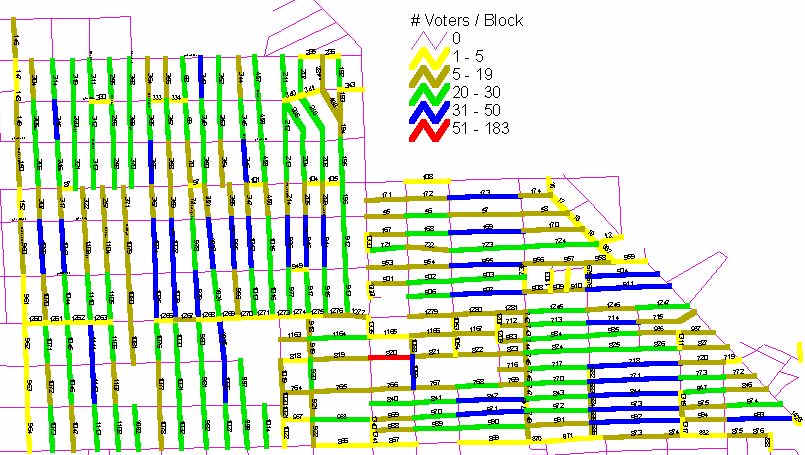
| Step 3 Once general neighborhoods are targeted, specific blocks can then be selected for walking. Each block has been assigned a number that corresponds to the walking sheet. Campaign coordinators would be wise to select areas that are have large numbers of blue and red blocks and include a minimum of purple and yellow blocks. |
|||||||||||||||||||||||||||||||||||||||||||||||||||||||||||||||||||
 |
|||||||||||||||||||||||||||||||||||||||||||||||||||||||||||||||||||
| Step 4 The final step is to prepare walking sheets of voting households. They will be prepared to the candidate's specifications but can include names, addresses and voting history. Space for notes and/or yard sign requests can also be included. At a minimum, voting households will be sorted so a walker can go up one side of the street and back the other. This is a sample walking sheet for one block. Note that the addresses start and end at the same location. Walking two or more blocks in succession involves doing the either the odd or eveb numbers on each sheet and then doing the other set on the way back.
Campaign Management Tools The campaign will be provided maps and other tools necessary to launch a successful walking effort. |
|||||||||||||||||||||||||||||||||||||||||||||||||||||||||||||||||||